
How to Select The Correct Shower Filter
SELECT THE RIGHT SHOWER FILTER FOR CLEAN AND HEALTHY WATER
- Shower filter dechlorination requires its own unique design approach to meet various health requirements. In less than 10 years, shower filters have grown from a non-industry to a significant niche market. Consumers, at first only concerned with the quality of their drinking water, are now more aware of the importance of removing chlorine, one of nature's most toxic elements, from their shower water, too. Yet, the similarity between drinking water filters and shower filters stops there. Shower filter dechlorination requires its own unique design approach to meet the elevated temperatures, high flow rates and size limitations of shower installations, all while providing users with an enjoyable shower experience. With more manufacturers jumping into the market, a better understanding of how filtration media, filter body size, flow rates, and shower head quality factor into the design equation can guide you toward the best product selection.
- All of our shower filters contain KDF. Our KDF shower filters stop hair color fade, and put an end to orange, red and green hair for good. Our shower water filters removes harmful chemicals that are harmful to not only your hair but also your body. Our filters are made to filter shower water in well water, city water, chloramine water, chlorine water, iron water and lead water as well as reduce volatile chemicals. Our Sante Dual Ultimate shower filter, Sante Dual Ultimate Shower filter for Well Water and Destroyer shower filter will help stop iron, rust or sediment from entering the shower.
Dechlorination benefits: separating facts from fiction
- The most important contribution shower filters make toward a healthier lifestyle is reducing the amount of free chlorine that comes into direct contact with your skin. Outrageous claims such as shower filters reducing the risk of heart attack and cancer are just that, outrageous. Any manufacturer touting unsubstantiated claims should be viewed with suspicion.
- What benefits can users expect from dechlorinating their shower water? The primary benefit is the removal of free chlorine. Chlorine is an inorganic substance that chemically bonds to the protein in your hair and skin, destroying the natural ecological balance of the skin. A quality dechlorinating shower filter will consistently remove 90 percent of free chlorine, resulting in softer, more manageable hair and healthier, younger-looking skin. For chlorine-sensitive people, particularly small children, the elderly and sufferers of asthma or emphysema, chlorine removal also is a safeguard against negative allergic reactions.
- KDF: The Preferred Shower Filter Media In developing a dechlorinating shower filter, designers are basically limited to two media types acceptable for potable water use: granular activated carbon (GAC) and atomized brass (KDF). Other media have been tried-the most notable being calcium sulfate-but were not deemed acceptable for direct human contact.
- GAC is an in-effective dechlorinating medium in shower filters. Many early manufacturers thought its properties were directly transferrable to shower filter applications. Not so. First, carbon is not recommended for hot water use.
- Unlike drinking water units that, on average, operate at ambient temperatures, shower filters are continuously exposed to temperatures ranging from body temperature to 105 degrees F. At these elevated temperatures, some of the contaminants adsorbed by the carbon can slough off and re-enter the water stream. GAC also is light in weight. Therefore, it requires a much larger housing to achieve the same density as other filter media. For example, 16 ounces of KDF can be housed in a filter body that is 3.2 ounces in weight and only a few inches long.
- For GAC to achieve the same level of performance, you would need enough media to fill a bucket. GAC is also highly adsorbent-like a cellulose sponge-and becomes saturated in hundreds of gallons versus thousands of gallons with KDF, requiring more frequent replacement.
- Today, non-carbon shower filters are the norm, and KDF the preferred media among shower filter designers. However, it is extremely effective at free chlorine removal. KDF is also bacteriostatic and tends to reduce or eliminate fungus and mildew build-up in the shower. KDF is composed of 50% copper and 50% zinc. It removes free chlorine by reversing the electrochemical process that originally separated the chlorine from sodium in a brine solution. Here's how it works: Copper and zinc are dissimilar metals. The tension between these metals generates between 900 and 1100 millivolts of electricity in an aqueous state (i.e., as water passes through the media). This is enough electricity to generate a galvanic charge that re-establishes the original electrolytic environment that created the free chlorine. The chlorine is able to recombine with a metal ion, normally zinc, to form a soluble zinc chloride that washes out of the filter and is harmless to humans. KDF not only offers dechlorination capabilities, but it lasts longer than carbon media. In general, a KDF shower filter will last one and-a-half years or more for a family of three. However, it should be noted that KDFs effectiveness is measured by its ability to generate the electrochemical action described earlier, not in gallonage. The cathode-anode relationship between copper and zinc (which generates the galvanic charge) is disrupted by particulate contaminants in the water. As a result, the less particulate matter in the water entering the filter, the longer the KDF media will generate adequate levels of electricity to effectively remove free chlorine. So, a KDF shower filter in Bangor, Maine, where the particulate contaminants in the water are low, will last a lot longer than one in Albuquerque, New Mexico. Because buyers are more familiar with the "gallonage" terminology, many KDF shower filter manufacturers list gallonage as a lifespan rating. However, this should be viewed as a warranty figure rather than a true representation of the actual life of the product.
If your hair is turning orange or red from iron, copper, rust or sediment and you have well water we have the filter for you. We have been working with our clients for years to develop a shower filter that will correct the problems that come with well water. You need a KDF shower filter. No carbon filter will work because carbon does not work with hot water. The more KDF the better and we have the shower filter with the MOST KDF. The Ultimate Dual KDF shower filter is the strongest shower filter made with more KDF than any other shower filter. Our Ultimate Dual KDF shower filter for Well Water will reduce the amount of chemicals that cause you changing hair color and texture and skin issues such as dryness and itching. The chemicals in well water such as iron, rust and heavy metals chemically bond to the protein in your hair destroying the natural ecological balance of your hair. The Ultimate Dual KDF shower filter will consistently remove 95% of these chemicals resulting in softer more manageable hair, hair color that lasts and healthier, younger looking skin and hair. The Ultimate Dual Shower filter for Well Water is great for people who are chemically sensitive, particularly small children, the elderly and sufferers of asthma, emphysema, or have negative allergic reactions to the chemicals that can be present in well water.
Select the shower filter for you!
Sante Ultimate shower filter for Well Water #85087
The Sante Ultimate shower filter is the strongest shower filter out there with 10 times the KDF of any other shower filter. The Ultimate shower filter for Well Water removes, lead, iron, heavy metals, chlorine and more. Contaminated Water can cause;
- Orange, green and dry hair
- Dry skin and skin irritation
- Smelly, foul tasting colored water
- Stomach illness
- Acute and chronic toxicity
- Rusty iron residue
- Hard water
….AND MORE!
The Sante Ultimate shower filter for Well Water contains 2 100% KDF Filters.
The Ultimate Shower filter for Well Water is also available with a hand held shower wand # 85087HH.
Sante Ultimate shower filter for City Water #92000.
Soften the shower water while balancing the PH. Remove chlorine, chloramines (ammonia), lead, iron, harmful contaminants, VOC’s, fluoride, and more with the Ultimate. The Sante Ultimate Shower filter contains KDF plus Chloramine & Fluoride removing medias.
Also available with a hand held shower wand, item # 92000HH
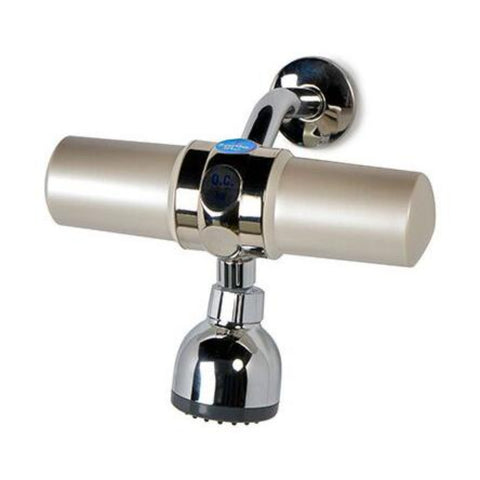
The Destroyer in both chrome (49785C) and white (#49790)
Of all of our pure KDF shower filters, this is the best at contaminate and chlorine removal. The DESTROYER KDF SHOWER FILTER removes up to 99.99% harmful chlorine. In order for a shower filter to be effective it must contain KDF. The Destroyer shower filter contains 100% KDF 55.
Buy our Santé DUAL ULTIMATE® shower filter, Santé DESTROYER® shower filter, or Santé AQUAPURE PRO® shower filter today!
 |
 |
 |
|
|
Brand |
Ultimate Dual Shower Filter City Water World's Strongest with the most KDF Chloramine, Chlorine, Fluoride, Lead, Iron, Heavy Metals |
Destroyer Shower Filter Well & City Available in chrome or white finish Chlorine, Lead, Iron, Heavy Metals |
Ultimate Dual Shower Filter Well Water World's Strongest With the most KDF End Copper, Lead, Iron Problems End Hair Color Problems. Stop Green Hair |
| Model | 92000* | 49785C or 49790 | 85087* |
| Price | $179.99 | $87.99 | $179.99 |
| Replacement | Yes - set of 2 filters | Yes - one | Yes - set of 2 filters |
| Cartridge Cost | $109.99 set of 2 filters | $46.99 | $109.99 set of 2 filters |
| Refill Life |
12 months |
12 months 24,000 gallons |
12 months 30,000 gallons |
| Media |
KDF Plus Chloramine &Fluoride Removing Medias |
100% KDF 55 | 2 100% KDF Filters |
| Reduce Chlorine |
Yes, up to 99% |
Yes, up to 98% | Yes, up to 99% |
| Reduce VOCs | Yes | Yes | Yes |
| Reduces Chloramines & Fluoride | Yes | No | No |
| Reduces Lead, Copper & Iron | Yes | Yes | Yes |
| Well Water | Yes + Sulphur | Yes | Yes, the best well filter in the world. |
| City Water | Yes | Yes | Yes |


